

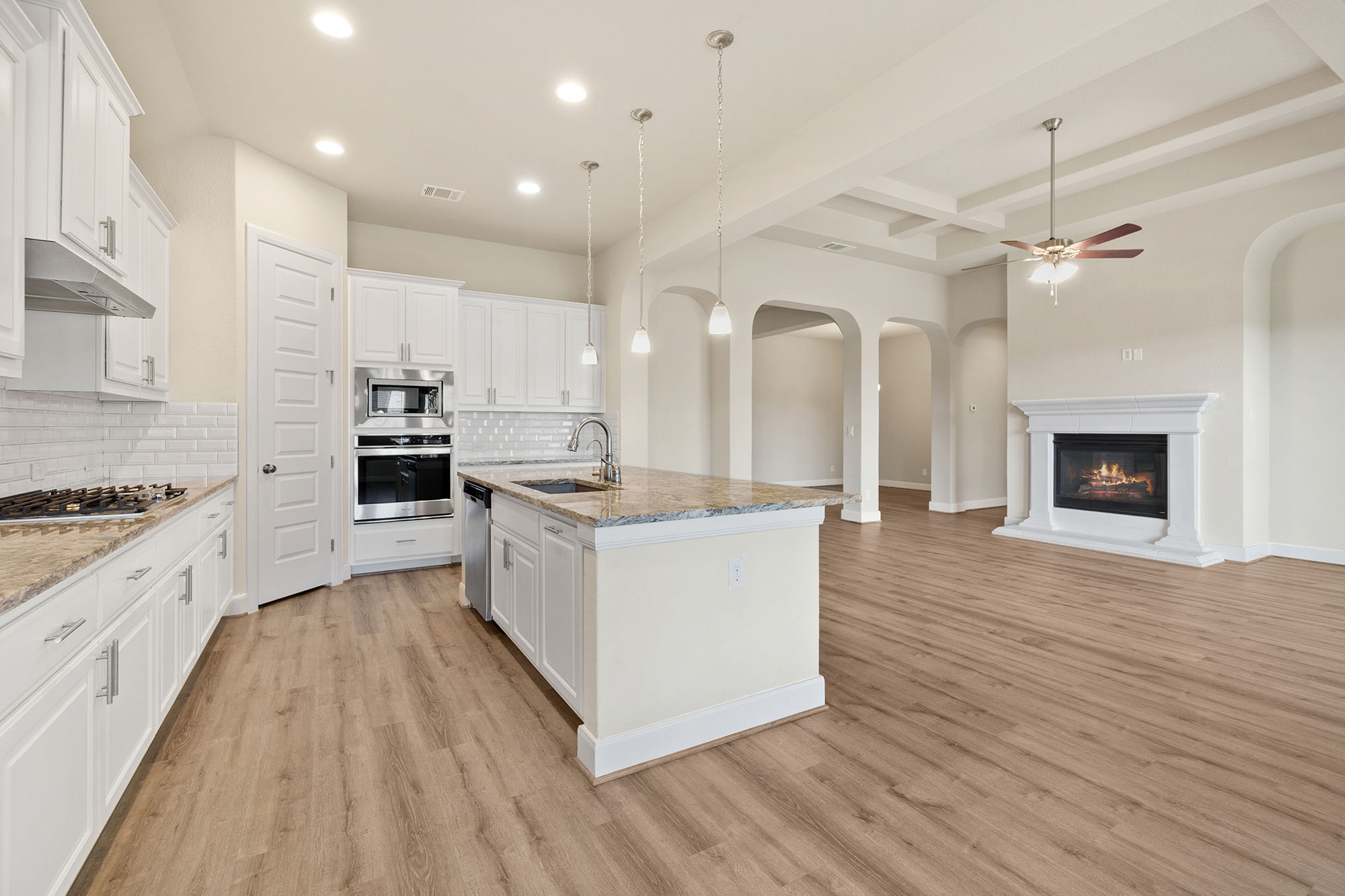
New Slabs Are Still Drying Long After the House Looks Finished
A newly poured concrete slab continues releasing moisture vapor for months, sometimes over a year, after it's poured and looks completely dry to the eye. That moisture has to escape somewhere, and if solid hardwood goes down before the slab has released enough of it, the wood can cup, buckle, or delaminate from trapped moisture pushing up from underneath, even with a vapor barrier in place.
Builders in fast growing areas like Prosper are working on tight timelines between foundation pour and closing day, often measured in months rather than the year or more a slab technically needs to fully cure. Vinyl flooring, which isn't vulnerable to slab moisture the way solid hardwood is, lets builders hit closing dates without gambling on a wood floor that could fail from moisture the slab hasn't finished releasing yet.
This Is a Timeline Decision, Not Only a Cost Decision
It's easy to assume vinyl shows up in new construction purely to save money, and cost is certainly part of any builder's material decision. But the moisture timeline is a real engineering constraint that exists independently of budget, and it applies just as much to a higher end build as an entry level one if the slab hasn't had enough time to cure.
This is also why some builders offer hardwood as an upgrade option but specifically note it can't be installed until a certain point after closing, rather than at the initial build stage. That's not a sales tactic, it reflects the same moisture timeline working in the buyer's favor instead of against it, once enough time has passed after the pour.
What This Means If You Want Real Wood Eventually
If your new Prosper home came with vinyl and you're planning to upgrade to hardwood later, timing still matters even after you've moved in. A slab that was poured recently may still be releasing more moisture than solid hardwood can tolerate, even a year or more after closing, depending on the original pour date and local conditions.
A moisture test on the slab is the only reliable way to know where things actually stand, rather than guessing based on how long you've lived in the house. This is also where engineered hardwood becomes a genuinely useful option, since its layered construction tolerates a wider moisture range than solid wood does, which can shorten the wait considerably if a test shows the slab isn't fully ready for solid wood yet.
Vinyl Isn't a Downgrade
None of this makes vinyl a lesser choice. It's a material built to perform well in exactly the conditions a new slab presents, and plenty of homeowners keep it long term because it holds up well in daily use without the moisture sensitivity hardwood carries. The decision between staying with vinyl or upgrading later really comes down to what look and feel you want long term, not which one is objectively better.
Knowing why the vinyl is there in the first place just makes it easier to plan your next step, whether that's staying with what you have or timing an upgrade around when your slab is actually ready for it.
At Dungan's Floors, we test slab moisture levels for homeowners across new Prosper construction so you know exactly when your home is ready for a hardwood upgrade, rather than guessing based on your closing date. We serve homeowners throughout Mckinney, TX, Allen, TX, Plano, TX, Princeton, TX, Prosper, TX, and Celina, TX from our showrooms at McKinney, TX. Contact us to schedule a moisture test and talk through your upgrade timeline.


