

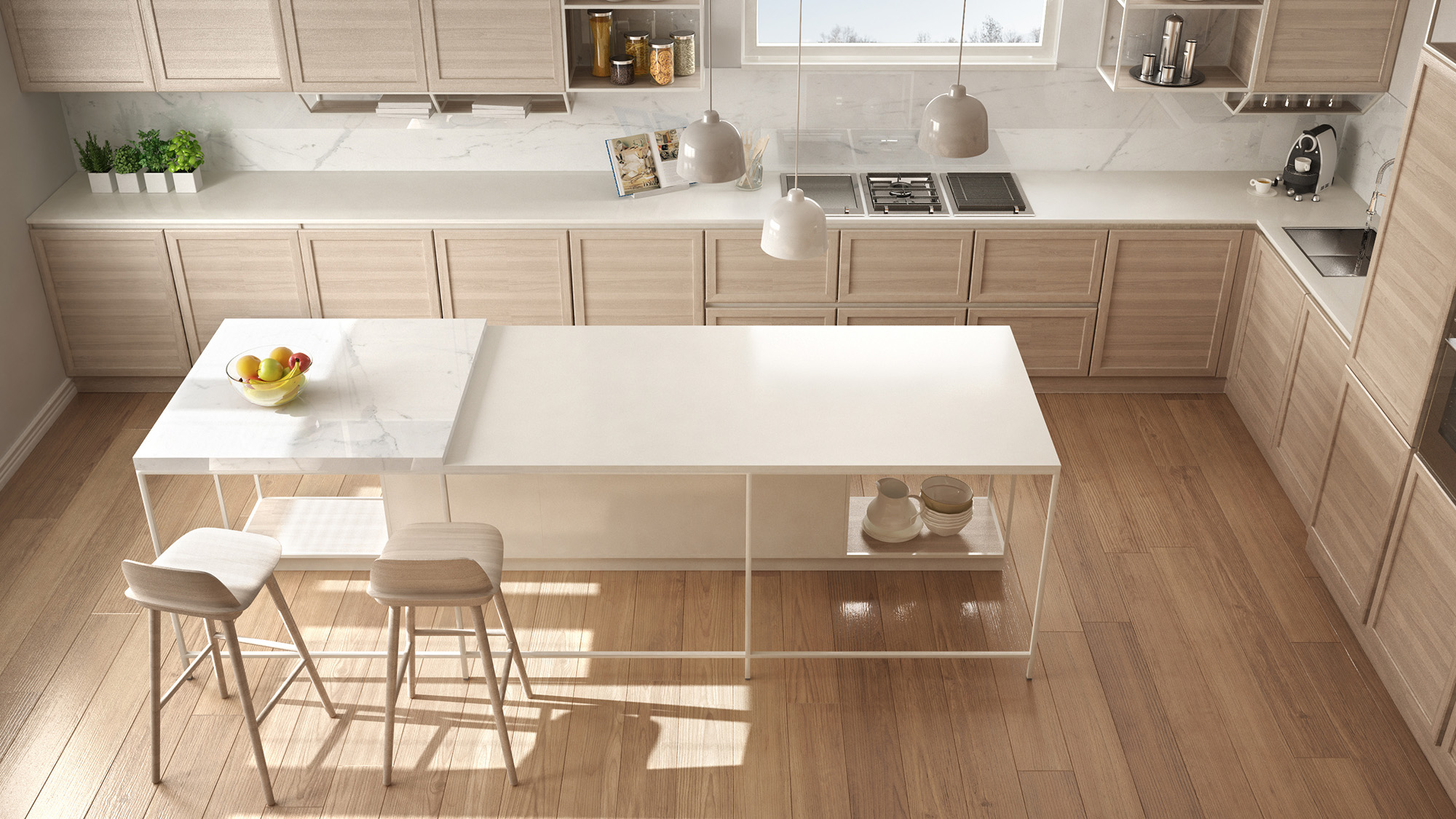
Matching wood floors to wood cabinets sounds like the safe choice during a kitchen remodel. It feels logical. If the cabinets are oak, choose an oak floor. If the cabinets are warm brown, choose a warm brown floor. The problem is that kitchens are not built from color names. They are built from undertones, grain patterns, light direction, sheen levels, cabinet mass, countertop movement, and the way all those surfaces read together across the room.
At Dungan's Floors, this comes up often with homeowners choosing hardwood flooring for kitchens, dining areas, and open living spaces. A close match can sometimes work, but when the floor and cabinets are too similar, the kitchen may lose contrast and depth. Instead of looking custom, the space can feel flat, heavy, or overly coordinated.
The issue is not wood on wood
Wood cabinets and hardwood floors can look beautiful together. The issue starts when both surfaces compete with the same tone, same grain intensity, and same visual weight. When that happens, the eye has nowhere to rest. The room becomes one continuous wood field instead of a layered kitchen with structure.
This is especially important in open-concept homes, where the kitchen floor often continues into living rooms, dining rooms, hallways, and entryways. A floor that looks fine beside one cabinet sample may feel very different once it covers hundreds of square feet. In larger spaces, small undertone mismatches become much more obvious.
Undertone matters more than the color name
A cabinet may be called white oak, natural oak, walnut, maple, or espresso, but those names do not tell the full story. One “natural oak” finish may lean yellow, while another leans beige, pink, gray, or honey. Hardwood flooring has the same issue. Two woods can both be warm, but one may feel clean and modern while the other feels orange or dated.
Before choosing hardwood, homeowners should compare flooring samples against cabinet doors in the actual home. Morning light, afternoon light, recessed lighting, and under-cabinet lighting can all change how the finish reads. A floor that looks neutral in a showroom can look too yellow beside warm cabinets or too gray beside cream paint.
Perfect matching can make expensive materials disappear
The goal of a remodel is usually not to make every surface blend together. It is to create a room where the materials support each other. When cabinets and floors are nearly identical, the cabinetry can lose its shape and the flooring can lose its character. The room may still be expensive, but it does not always feel designed.
Good contrast does not have to mean dramatic contrast. A medium-tone hardwood can work with lighter cabinets. A soft natural floor can balance darker stained cabinetry. A wire-brushed floor can pair with smoother cabinet fronts. Even a small difference in texture or sheen can create separation without making the kitchen feel busy.
Grain direction and plank width change the room
Cabinet grain is mostly vertical, while hardwood floor grain runs across the room. If both surfaces have strong grain movement, the kitchen may feel restless. This can happen when heavily grained oak cabinets are paired with active oak flooring, especially in kitchens with visible islands, tall pantry cabinets, or open shelving.
Plank width also matters. Wide-plank hardwood often gives a calmer, more current look, but it needs to be chosen carefully beside wood cabinetry. If the cabinets already have a strong visual rhythm, a quieter floor may work better. If the cabinets are painted or simple, the floor can carry more character.
How to create a better hardwood and cabinet pairing
The best pairings usually start by deciding which surface should lead. If the cabinets are the main feature, the floor should support them with a quieter finish. If the hardwood is meant to carry warmth through the home, the cabinets can be simpler, painted, or slightly more restrained in tone.
Homeowners should also test the flooring sample with the countertop and backsplash, not just the cabinets. A warm wood floor, warm wood cabinet, creamy stone countertop, and beige backsplash can quickly become too tonal. A little contrast through flooring, tile, or hardware can keep the space from feeling washed together.
When matching does work
Matching wood floors to cabinets can work when the room has enough contrast elsewhere. For example, painted walls, stone countertops, strong hardware, and clean tile can help separate the surfaces. Matching can also work in smaller doses, such as a wood island paired with hardwood flooring and painted perimeter cabinets.
The danger is assuming matching is automatically timeless. A more thoughtful approach is to coordinate rather than copy. The floor and cabinets should feel related, but not identical. That small distinction is often what makes a kitchen feel finished rather than forced.
If you are remodeling a kitchen or replacing hardwood in an open-plan home, do not choose flooring by trying to match the cabinets exactly. Look at undertone, grain, sheen, plank width, lighting, and the full kitchen palette before making the final call.
Visit McKinney, TX to compare hardwood flooring samples in person with the team at Dungan's Floors. We proudly serve Mckinney, TX, Allen, TX, Plano, TX, Princeton, TX, Prosper, TX, and Celina, TX. If you are ready to choose hardwood that works beautifully with your cabinets and your home, contact us today.


