

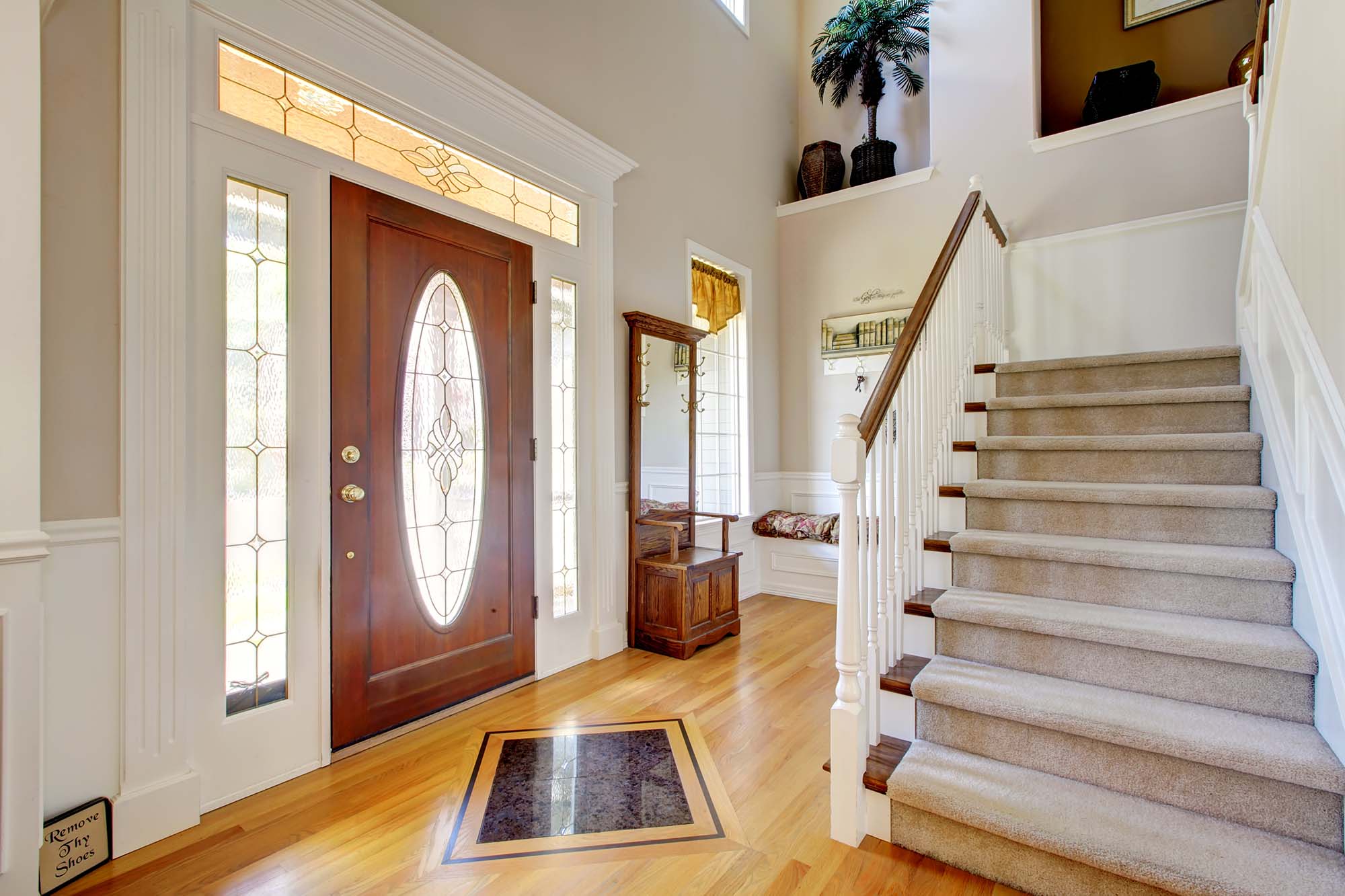
A staircase is the one surface your home makes you perform on daily: half-awake, carrying laundry, one hand on a coffee mug, trying not to recreate a slapstick scene. So when you upgrade stairs, it’s not just about aesthetics. It’s safety, noise, durability, and how the details feel underfoot for years. If you’re comparing options with Dungan's Floors at McKinney, TX, here’s the technical breakdown that makes decisions easier.
Flush nosing vs overhang: what you’re really choosing
Flush stair nosing (modern, seamless look)
Flush nosings align the tread edge with the riser face, creating a clean “slab” look. They’re popular in modern interiors because they read as minimalist and architectural.
Pros
Sleek, contemporary profile
Easier to keep visually “quiet” in open-concept homes
Works well with wide-plank hardwood stair treads for a monolithic look
Cons
Less natural toe grip compared to a slight overhang
Edge durability depends heavily on the nosing construction and finish system
Requires precise layout so tread depth still feels comfortable
Overhang nosing (traditional, more forgiving)
Overhang profiles project past the riser, creating a defined lip at each step.
Pros
Familiar feel underfoot
Slightly better perceived grip and step definition
Often easier to retrofit in older staircases without rebuilding faces
Cons
Can look “busy” if the rest of the home is modern
The projecting edge is more exposed to impacts (vacuums, shoes, moving furniture)
Code reality check: nosing projection matters
Many residential stair requirements are governed by versions of the International Residential Code (IRC). A commonly referenced rule: nosing projection not less than 3/4" and not more than 1-1/4".
Local amendments can apply, but the big point is this: you can’t choose a profile purely for looks without checking the dimensions.
Design takeaway: If you love the flush look, a pro will evaluate tread depth, riser consistency, and whether the stair geometry still feels natural and safe.
The durability detail most people miss: edge construction
For hardwood stair treads and nosings, ask specifically about:
Wear layer/finish system (site-finished vs prefinished behavior at the edge)
Nosing material (solid hardwood nosing vs engineered assemblies)
Grain orientation at the nosing (edge durability improves when construction resists splitting)
Edges take the most abuse. A beautiful floor can survive years, but a weak stair edge can look tired fast.
Squeak-minimizing install method (what actually works)
Squeaks are usually movement: wood rubbing against wood, fasteners shifting, or a tread flexing over a slightly uneven substrate. The fix is rarely “one magic screw.” It’s a system.
1) Start with structure and flatness
If the stringers or substructure have dips or inconsistencies, every step becomes a tiny lever. Addressing unevenness and prep is foundational.
2) Use adhesive the right way (not just “some glue”)
A continuous, appropriate construction adhesive bead between tread and substrate reduces micro-movement. The goal is full contact, not random blobs.
3) Fastening schedule: screws beat nails for silence
Nails can back out microscopically over time. Screws hold tighter against movement. A pro install typically includes:
Predrilling to avoid splitting
Countersinking as needed
Consistent fastener spacing (not “wherever it feels fine”)
4) Control wood movement, don’t fight it
Seasonal changes in Texas homes can cause expansion/contraction. Proper acclimation, appropriate attachment method, and consistent humidity control reduce future noise and gapping.
5) Finish and traction: don’t build a slippery runway
If you go with a smoother finish, consider a lower sheen or a traction strategy (runner, grip strips, or texture choices) especially for households with kids or older family members.
Choosing the right look for your home’s flow
A good rule: let your main floor style vote first. Wide-plank hardwood and clean trim details often pair beautifully with flush nosings. More traditional interiors, detailed millwork, or classic stain colors often suit a slight overhang profile.
And remember: stairs are a high-visibility feature. The “quiet” choices (consistent stain, consistent sheen, clean edge details) often look the most expensive.
The right stair profile is the one that matches your home’s style and respects geometry, safety, and long-term durability. Whether you lean flush-modern or classic-overhang, the squeak-minimizing method is the same: solid prep, full contact, smart fastening, and movement-aware planning. To plan a staircase upgrade that looks sharp and feels solid, contact Dungan's Floors or visit McKinney, TX. We serve Mckinney, TX, Allen, TX, Plano, TX, Princeton, TX, Prosper, TX, and Celina, TX.


