

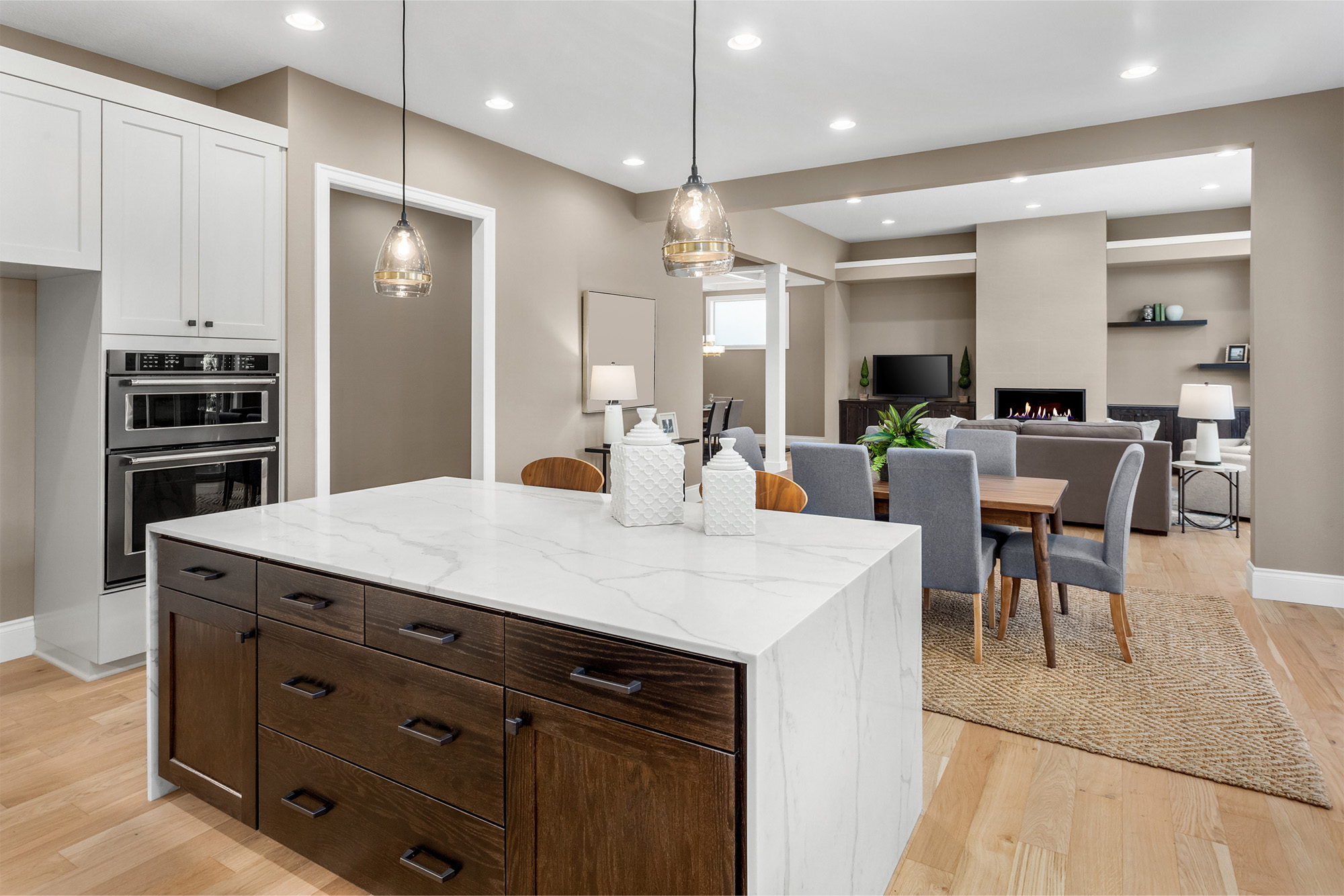
One of the biggest design shifts in 2026 is that matching everything is out. The old rule of locking your floors, cabinets, and furniture to a single wood tone is gone, and designers are deliberately mixing tones to make rooms feel collected and warm instead of flat and showroom-stiff.
The catch is that there's a real difference between mixed and mismatched. Done with a little intention, layered wood tones look custom and expensive. Done carelessly, an open-concept great room turns into a jumble of competing browns. Here's how to land on the right side of that line.
Start With a Dominant Tone
Every well-balanced room has one wood tone that anchors it, and in an open floor plan that's almost always your flooring. It's the largest continuous surface and it sets the temperature for everything else, so choose it first and let the other woods relate to it rather than fight it.
Once your floor is set, treat it as the lead. Cabinetry, furniture, and built-ins become supporting players that either echo the floor or contrast with it on purpose. A warm mid-tone white oak floor, for example, gives you a flexible base that pairs beautifully with both lighter ash furniture and darker walnut cabinetry.
Mind the Undertones
This is where most mixes go wrong. Two woods can be completely different colors and still look great together if their undertones agree, and two woods can be similar in color yet clash because one leans cool and the other leans warm. Undertone, not shade, is what your eye actually reads.
The simplest approach is to keep your undertones in the same family. If your floor is warm and golden, lean into other warm woods with honey, caramel, or red-brown undertones and avoid anything with a gray or ashy cast nearby. When in doubt, hold samples next to each other in your home's daylight, because undertones shift dramatically between showroom lighting and your own windows.
Use Breaks and Contrast on Purpose
Wood tones look best when they aren't crammed directly against each other. Give them a little breathing room with a non-wood element in between, a stone countertop, a tile backsplash, a painted island, or a rug, so the eye gets a rest and the tones read as a layered palette rather than a pile-up. In high-traffic or wet zones where you want that break, wood-look tile is a smart way to introduce a different texture without adding a fourth wood tone to the mix.
Contrast is your friend when it's intentional. A light floor with dark cabinets, or a mid-tone floor with a deep walnut dining table, creates depth and a sense of design confidence. Aim for clear difference rather than a near-match, because woods that are almost the same tone tend to look like a mistake instead of a choice.
Get a Second Set of Eyes Before You Commit
Mixing tones well is easier with samples in hand and someone who does this every day, especially when your floor has to coordinate with cabinets and furniture you already own. At Dungan's Floors, we help homeowners across Mckinney, TX, Allen, TX, Plano, TX, Princeton, TX, Prosper, TX, and Celina, TX choose flooring that anchors a mixed-tone palette and ties an open-concept home together.
Bring photos of your cabinets and furniture to McKinney, TX and we'll pull floor samples that work with what you've got. Contact us for a free estimate, and let's build a warm, layered look that feels designed rather than accidental.


