

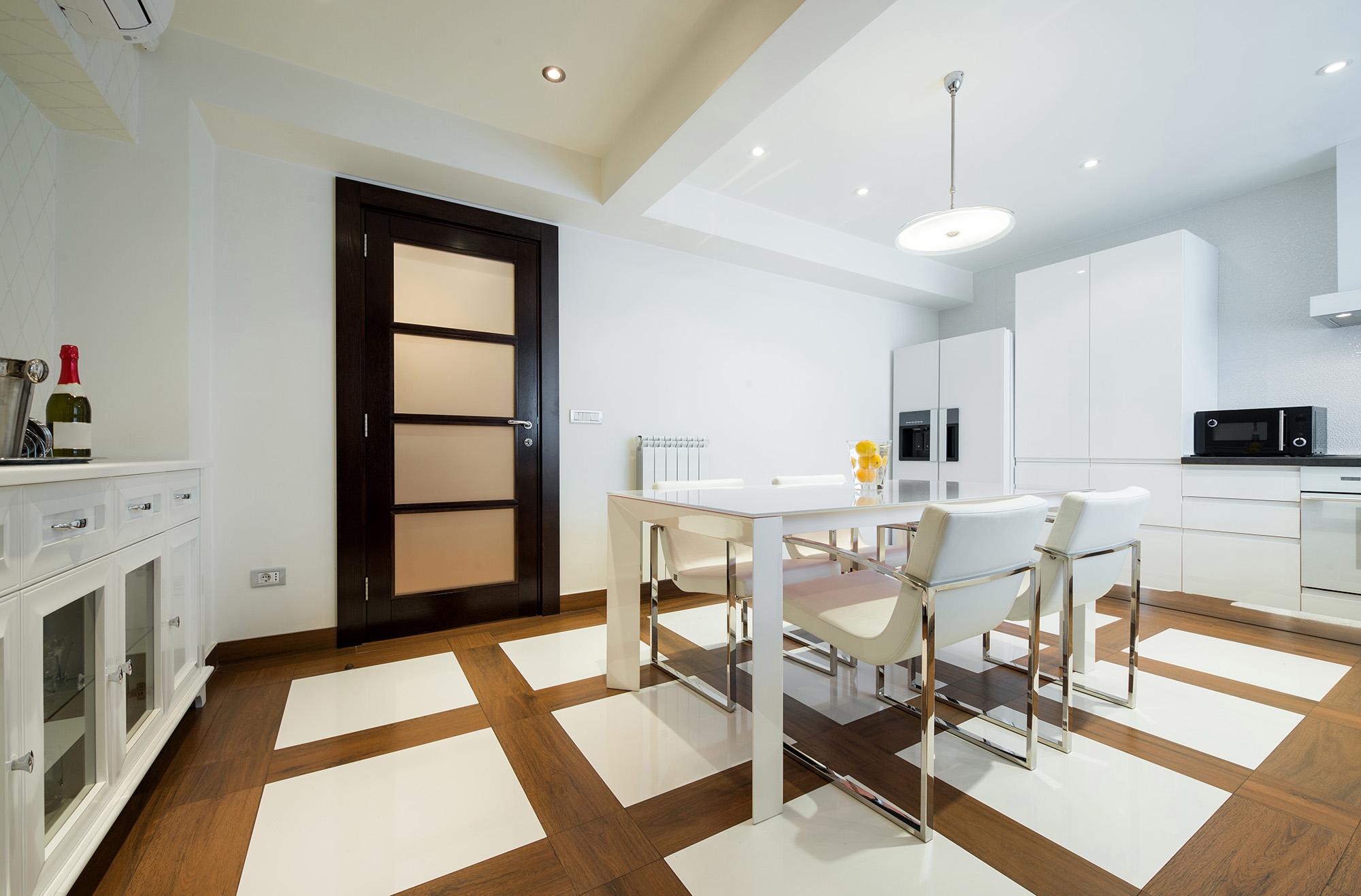
Most homeowners think walls define rooms. In reality, floors do far more of the heavy lifting—especially in today’s open-concept homes across North Texas. Flooring doesn’t just sit beneath furniture. It quietly directs how your eyes move, how your body navigates space, and how comfortable a home feels over time.
At Dungan's Floors, customers visiting our showrooms at McKinney, TX often say they want their home to feel “more open,” “less choppy,” or “better connected.” What they’re really responding to is broken sightlines—and flooring is one of the most powerful tools to fix them without building or removing walls.
What sightlines really mean in a home
Sightlines are the natural visual paths your eyes follow when you enter and move through a space. They influence:
Where attention lands first
How far a room feels
Whether spaces feel calm or chaotic
In open layouts, floors become the primary visual plane connecting everything. When flooring is poorly planned, the eye gets stuck or distracted. When done well, movement feels effortless—even if you can’t explain why.
Why open-concept homes rely on flooring more than ever
Many North Texas homes feature long, uninterrupted footprints. Kitchens bleed into dining areas, which flow into living rooms. Without walls, flooring becomes the organizer.
Problems arise when:
Patterns reset too often
Grout lines interrupt flow
Plank direction fights the layout
Instead of openness, the result is visual fatigue.
Plank direction: the most overlooked decision
The direction hardwood or plank-style tile is installed matters more than color or species. Planks guide the eye the same way arrows do.
Running planks parallel to the longest wall extends space
Aligning planks with main walkways improves flow
Inconsistent direction breaks sightlines and creates visual stops
This is one of the most common mistakes in DIY installs—and one of the easiest to avoid with professional planning.
Tile size and grout: visual speed vs. visual noise
Tile layout controls how fast the eye moves:
Small tiles with heavy grout slow visual movement
Large-format tiles accelerate it
In living areas, faster visual movement makes rooms feel calmer and more expansive. In transitional spaces like hallways, it improves flow and reduces the feeling of confinement.
Grout color matters too. High-contrast grout creates a grid that visually fractures space. Low-contrast grout lets the floor read as a single surface.
Flooring transitions as invisible boundaries
Transitions don’t have to be harsh. A shift from hardwood to tile can:
Signal function changes
Ground furniture groupings
Prevent open layouts from feeling undefined
The key is intentional placement. Random transitions feel chaotic. Purposeful ones feel natural.
When one continuous floor works—and when it doesn’t
Uniform flooring can work in smaller homes. In larger layouts, however, it often creates monotony. The eye has no cues, and spaces blend into each other without hierarchy.
Strategic variation—such as wood in living areas and tile in kitchens—adds structure without closing things off.
Furniture, lighting, and flooring alignment
Sightlines don’t exist in isolation. Flooring should align with:
Major furniture axes
Kitchen islands
Window and door openings
When these elements fight each other, even expensive interiors feel “off.”
Slab foundations and visual tension
Texas slab homes benefit from flooring layouts that respect structural lines. Ignoring them creates subtle visual stress that homeowners feel but can’t identify.
Professional installers plan layouts from the entry point outward, ensuring sightlines work from the moment you walk in.
Why homeowners notice the problem too late
Once flooring is installed, fixing sightline issues is costly. That’s why planning matters more than picking samples.
At Dungan's Floors, we don’t just help you choose flooring—we help you understand how it will behave in your space.
Flooring is your home’s quiet guide
Great flooring doesn’t shout. It guides. It connects rooms, supports movement, and makes homes feel intentional without adding walls or clutter.
Visit Dungan's Floors or call us today to explore flooring solutions designed around how you actually live. We proudly serve homeowners across Mckinney, TX, Allen, TX, Plano, TX, Princeton, TX, Prosper, TX, and Celina, TX, offering expert installation and guidance that makes every step feel right.


