

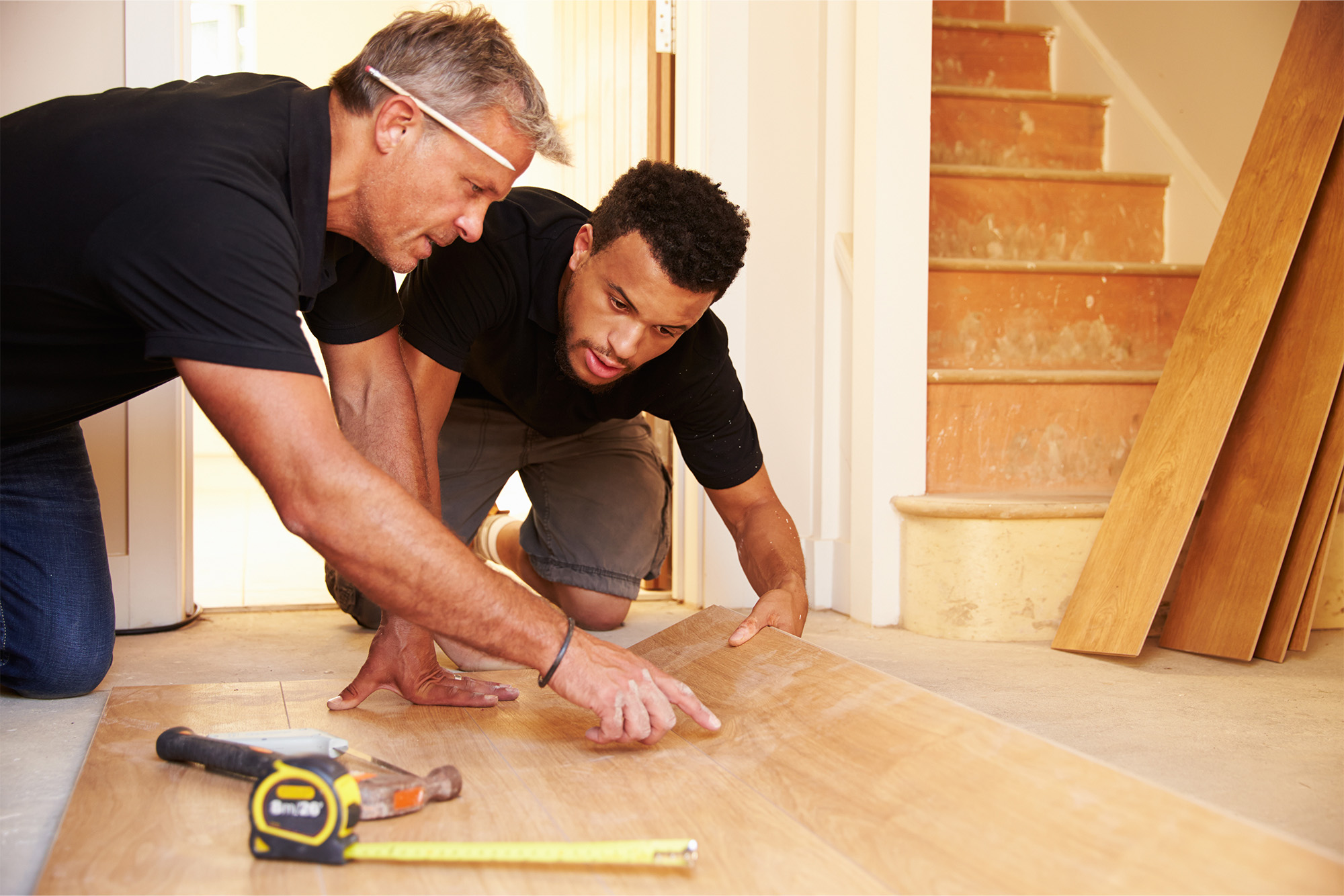
Most homes in North Texas are built on concrete slabs, and that slab plays a huge role in whether hardwood floors succeed or fail. At Dungan's Floors, homeowners visiting our McKinney, TX are often surprised to learn that moisture—not wood quality—is the leading cause of hardwood flooring problems in this region.
Moisture testing isn’t a formality. It’s a critical step that determines whether hardwood can be safely installed and which installation method will last.
Why Concrete Slabs Hold Moisture Longer Than You Think
Concrete never fully “dries.” It continues to release moisture vapor for years, especially in humid climates like McKinney, Allen, and surrounding cities. Even slabs that feel dry on the surface can push moisture upward into hardwood, causing cupping, gapping, or discoloration.
Seasonal humidity swings and heavy Texas rain increase vapor pressure, forcing moisture through the slab and into flooring materials.
The Most Reliable Moisture Testing Methods
Professional flooring contractors rely on specific testing methods—not guesswork.
Calcium Chloride Testing
This measures how much moisture vapor is emitted from the slab over 24 hours. It’s useful, but only reflects surface conditions.
In-Situ Relative Humidity (RH) Testing
This method measures moisture deeper inside the slab, providing a more accurate long-term reading. RH testing is now considered the gold standard for hardwood installation over concrete.
At Dungan's Floors, expert flooring installation includes moisture testing that meets manufacturer requirements—protecting warranties and long-term performance.
Acceptable Moisture Levels for Hardwood Floors
Most hardwood manufacturers specify:
Calcium Chloride: ≤ 3 lbs per 1,000 sq ft
RH Testing: Typically below 75–80%, depending on product
If moisture exceeds limits, installers must adjust the installation method—not force the product.
How Moisture Testing Impacts Installation Decisions
Moisture results determine:
Whether engineered hardwood is recommended over solid
Whether glue-down, floating, or nail-down systems are appropriate
Whether moisture mitigation systems are required
Skipping this step risks failure within the first year—especially after a Texas summer.
Why DIY Tests and “Dry Slabs” Are Misleading
Home test kits and plastic sheet tests don’t measure vapor pressure. They often give false confidence, leading to expensive repairs later.
Professional testing identifies problems before hardwood ever leaves the box.
Tile vs Hardwood on Moisture-Prone Slabs
Tile flooring is far more moisture-tolerant than hardwood, which is why porcelain and ceramic tile are often recommended in moisture-prone areas. However, even tile requires proper crack isolation and moisture management for long-term durability.
Before installing hardwood over concrete, moisture testing is non-negotiable. Visit Dungan's Floors at our McKinney, TX or contact today for a free flooring estimate. We proudly serve homeowners throughout Mckinney, TX, Allen, TX, Plano, TX, Princeton, TX, Prosper, TX, and Celina, TX with hardwood and tile solutions designed for Texas slabs.


