

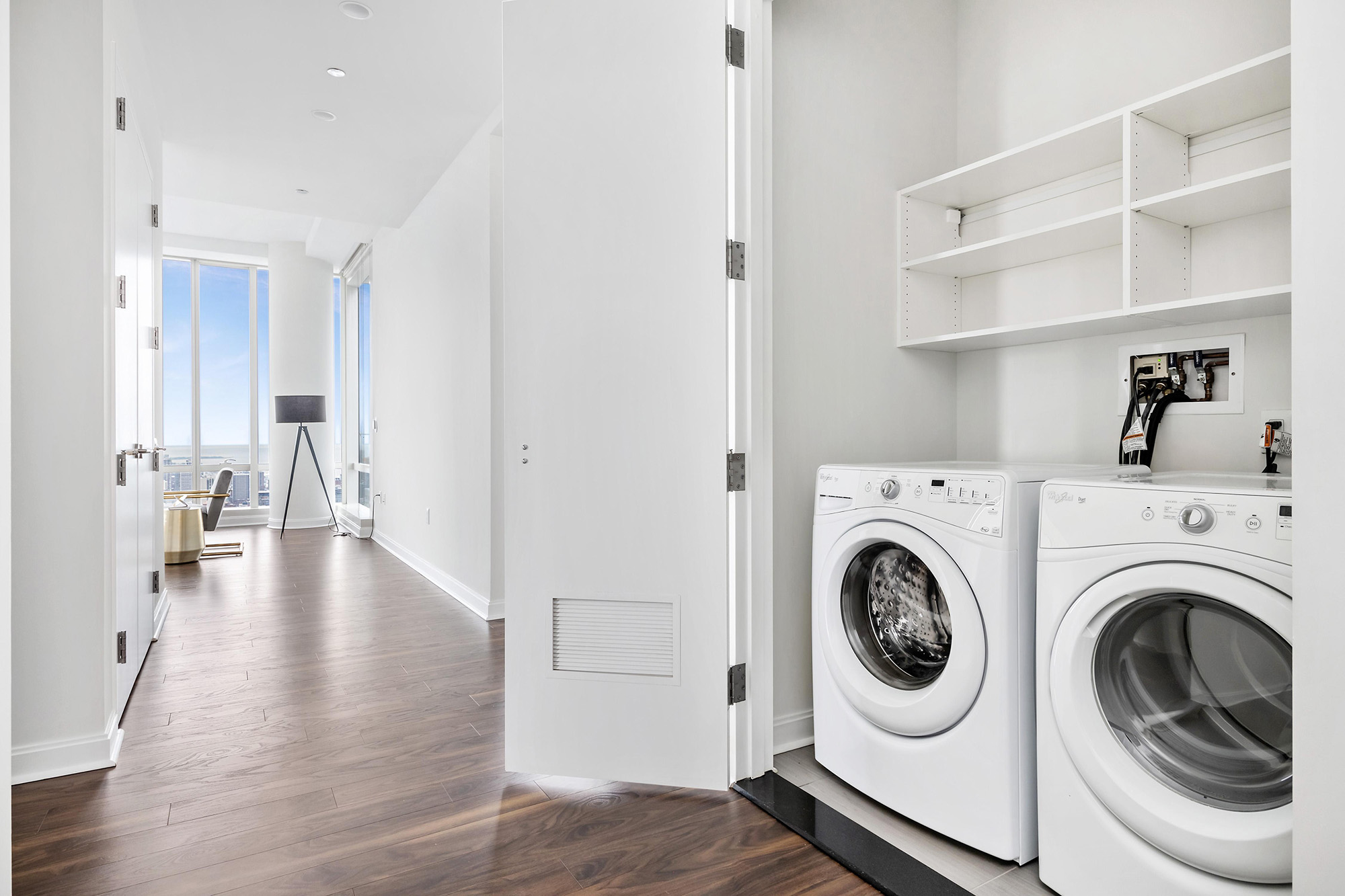
Your Washer Is a Bigger Moisture Source Than People Assume
A laundry room isn't just exposed to the occasional spill, it deals with condensation from the dryer vent, humidity from the washer's cycle, and the slow drip of a supply line or door gasket that's just barely failing without anyone noticing yet. That combination means the floor in this room is realistically damp far more often than a kitchen or bathroom floor, even when nothing looks visibly wet.
Porcelain tile handles this well on its own, since its water absorption rate is low enough to resist soaking up ambient moisture the way some other materials would. But the tile surface is rarely what fails first in a laundry room. It's almost always the grout and the substrate underneath that show wear first, because they're dealing with sustained low level moisture exposure that a kitchen floor typically doesn't see on a daily basis.
Why Grout Choice Matters More Here Than Anywhere Else in the House
Standard cementitious grout is porous by nature, and in a room with near constant low level moisture, that porosity becomes a real liability over time rather than a cosmetic concern. Epoxy grout, while more expensive and more particular to install, resists moisture penetration and staining far better than cementitious grout does, which makes it a legitimately stronger choice specifically for a room like this rather than an unnecessary upgrade.
This is a case where the room's actual use should drive the grout decision, not just the tile itself. A laundry room that runs loads daily is a very different moisture environment than a guest bathroom used a few times a week, and grout that would be perfectly fine in one room can wear out considerably faster in the other.
The Slope Problem Nobody Talks About Until There's a Leak
Most laundry rooms are built flat, the same as any other interior room, because they weren't originally designed with the expectation of water on the floor. If a supply line or drain hose ever fails, even briefly, a flat floor means that water has nowhere specific to go, and it can sit against baseboards or migrate under adjoining flooring before anyone notices.
A floor drain and a very slight slope toward it solve this problem directly, and it's worth discussing during a laundry room remodel even if it wasn't part of the original design. This isn't necessary for every laundry room, but it's a meaningful upgrade for one that runs a high volume of loads or sits near finished flooring in an adjoining room that would be expensive to repair if water ever did get underneath it.
Getting the Full Picture Before You Choose
A laundry room floor that holds up long term comes down to three separate decisions working together, the tile itself, the grout formulation, and whether the room needs a slope and drain built in. Treating tile selection as the only decision that matters is how a lot of laundry room floors end up needing repair years earlier than they should have.
This is worth walking through room by room with someone who installs laundry room floors regularly, since the right combination genuinely depends on how the room gets used day to day, not just what looks good in a showroom sample.
At Dungan's Floors, we walk through tile, grout, and drainage options together so your laundry room floor is built for how often you actually run loads, not just how it looks on install day. Browse our tile selection to see options built for consistently damp spaces. We serve homeowners throughout Mckinney, TX, Allen, TX, Plano, TX, Princeton, TX, Prosper, TX, and Celina, TX from our showrooms at McKinney, TX. Contact us to plan a laundry room floor that's built to last.


